Simone De Vivo
embEdDEd design MFA
HDK-Valand – Academy of Art and Design
Graduates: 2026
Specialisms: Design for Social Good / Design Research / Service Design
My location: Gothenburg, Sweden
Simone De Vivo
First Name: Simone
Last Name: De Vivo
University / College: HDK-Valand – Academy of Art and Design
Course / Program: embEdDEd design MFA
Graduates: 2026
Specialisms: Design for Social Good / Design Research / Service Design
My Location: Gothenburg, Sweden
Website: Click To See Website
About
I’m Simone De Vivo, a Rome-born, Sweden-based designer and researcher. Through design research, co-design and public engagement, I help organisations work more closely with the people they serve and turn that collaboration into meaningful change. My work spans services, communication, learning experiences and public-facing environments, often bringing together communities, organisations and institutions around shared challenges.Much of my practice focuses on designing with people who are often overlooked in decision-making processes, particularly people with visual impairments and the organisations that support them. Working alongside communities, organisations and businesses, I use workshops, collaborative research and prototyping to translate lived experience into practical interventions, new forms of knowledge and lasting organisational capacity. Accessibility, participation and inclusion are recurring themes in my work, not as specialist topics, but as ways of rethinking how people encounter services, spaces and each other.Food is a recurring material and method in my practice. Through shared meals, hospitality settings and sensory workshops, I use food as a way to facilitate dialogue, build relationships and explore how inclusion is experienced in everyday life. This approach informs projects across culture, education, accessibility and organisational change, with a particular interest in how design can contribute to social regeneration.I hold a BFA in Design + Change from Linnaeus University and an MFA in Embedded Design from HDK-Valand, University of Gothenburg. Alongside my design practice, I lecture, facilitate workshops and develop educational resources that help inclusive design become everyday practice.
Cosmethic Access – Making space for people with visual impairments in the design process of cosmetic product packaging
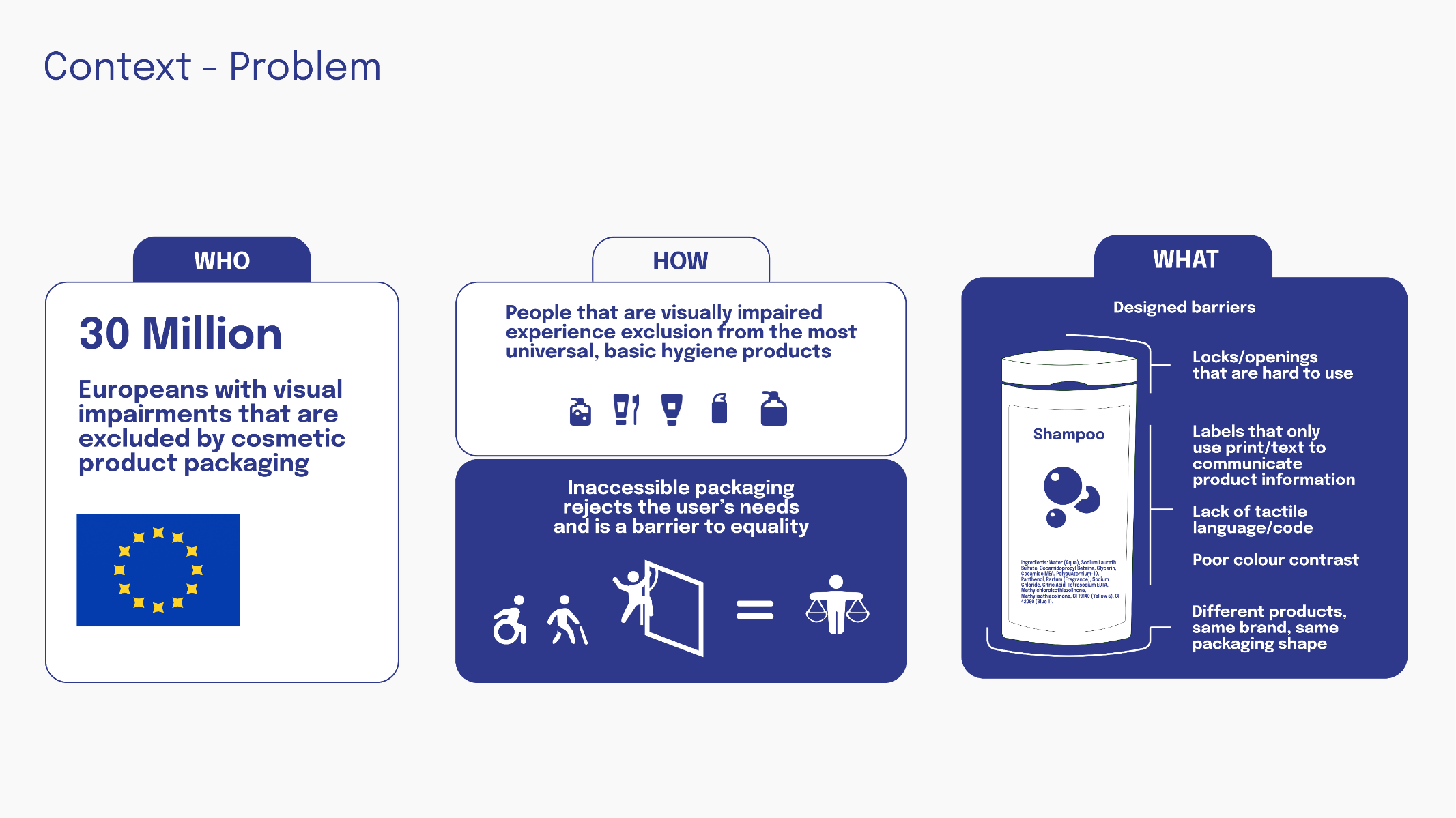
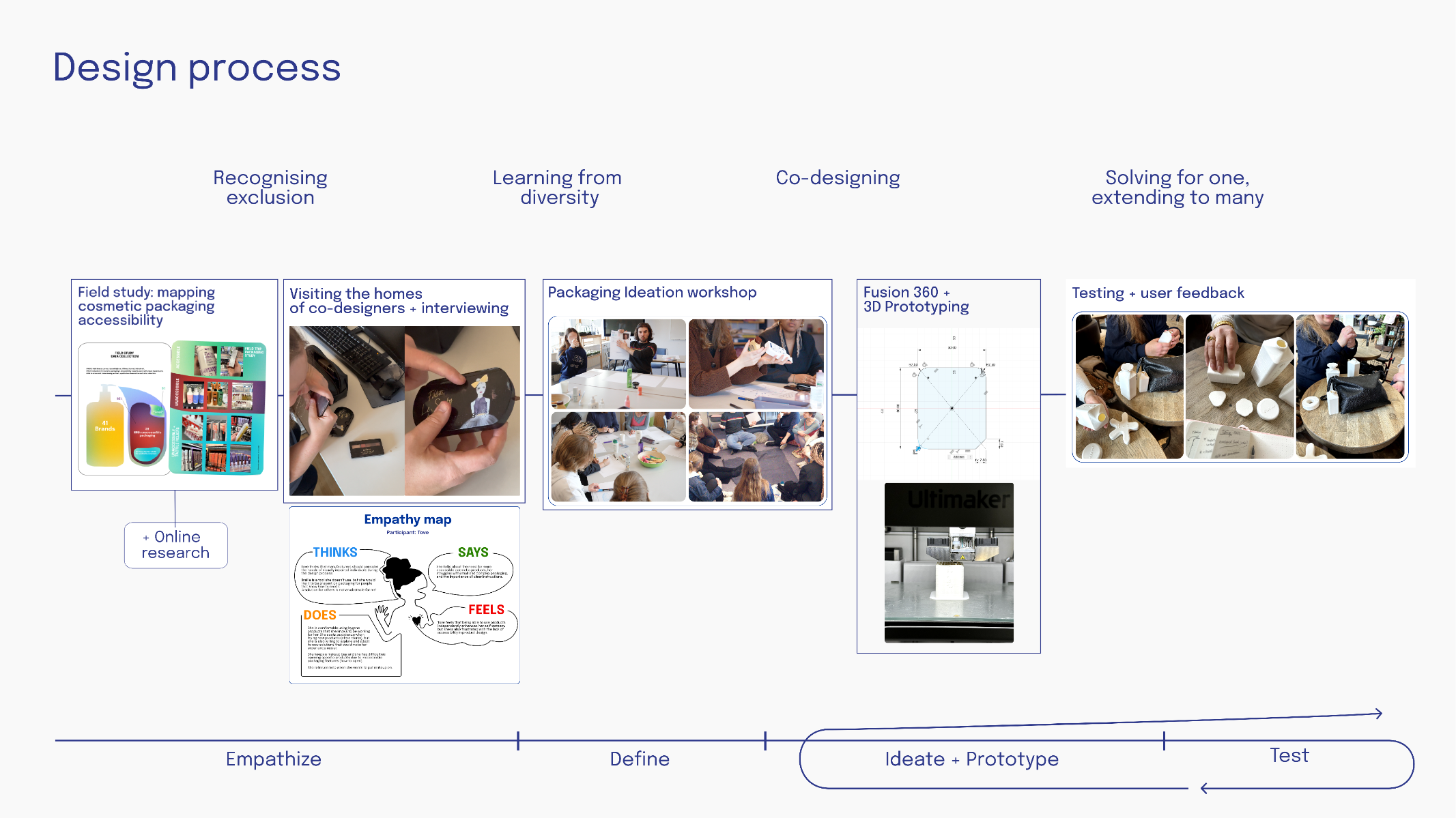
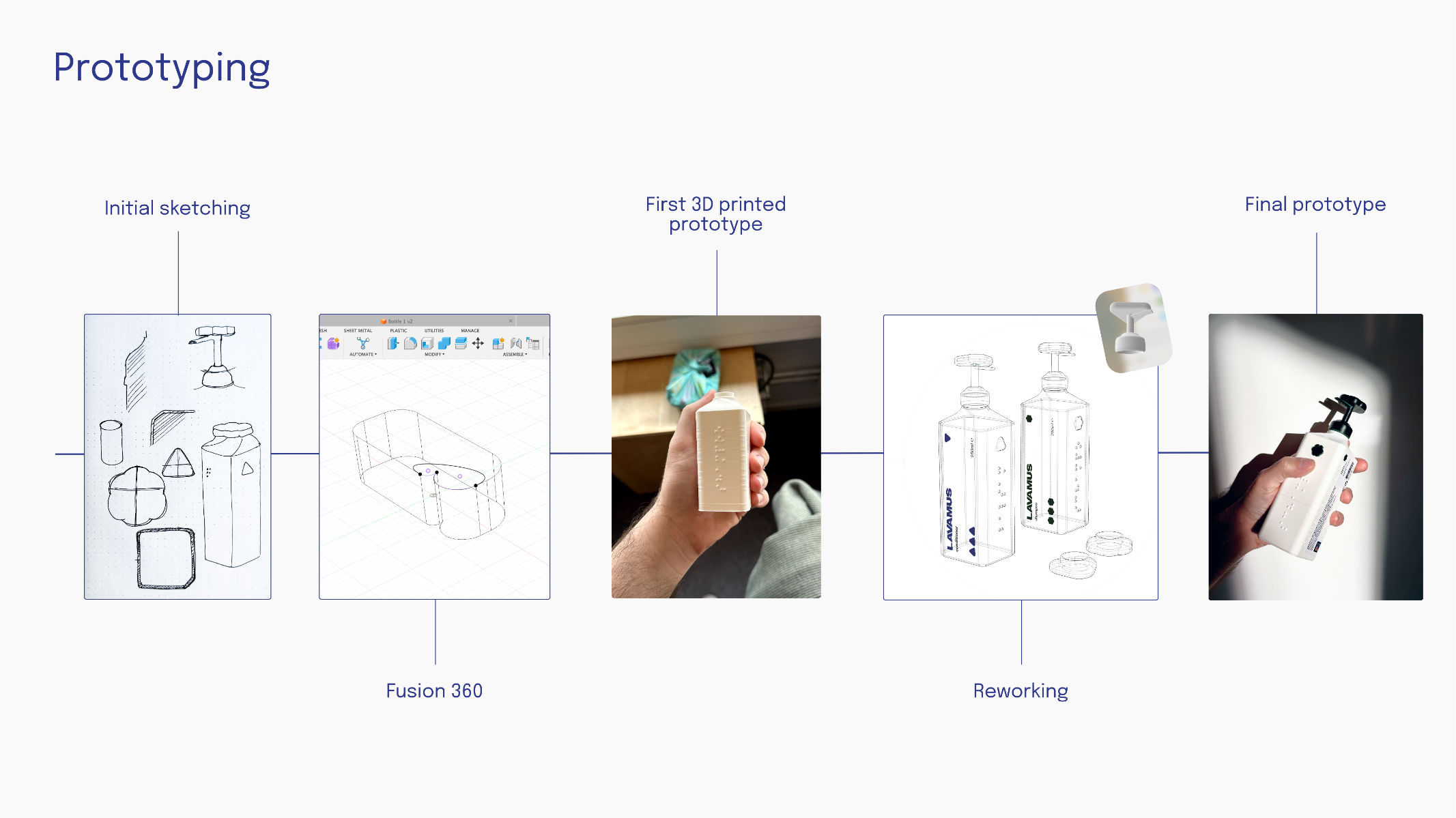
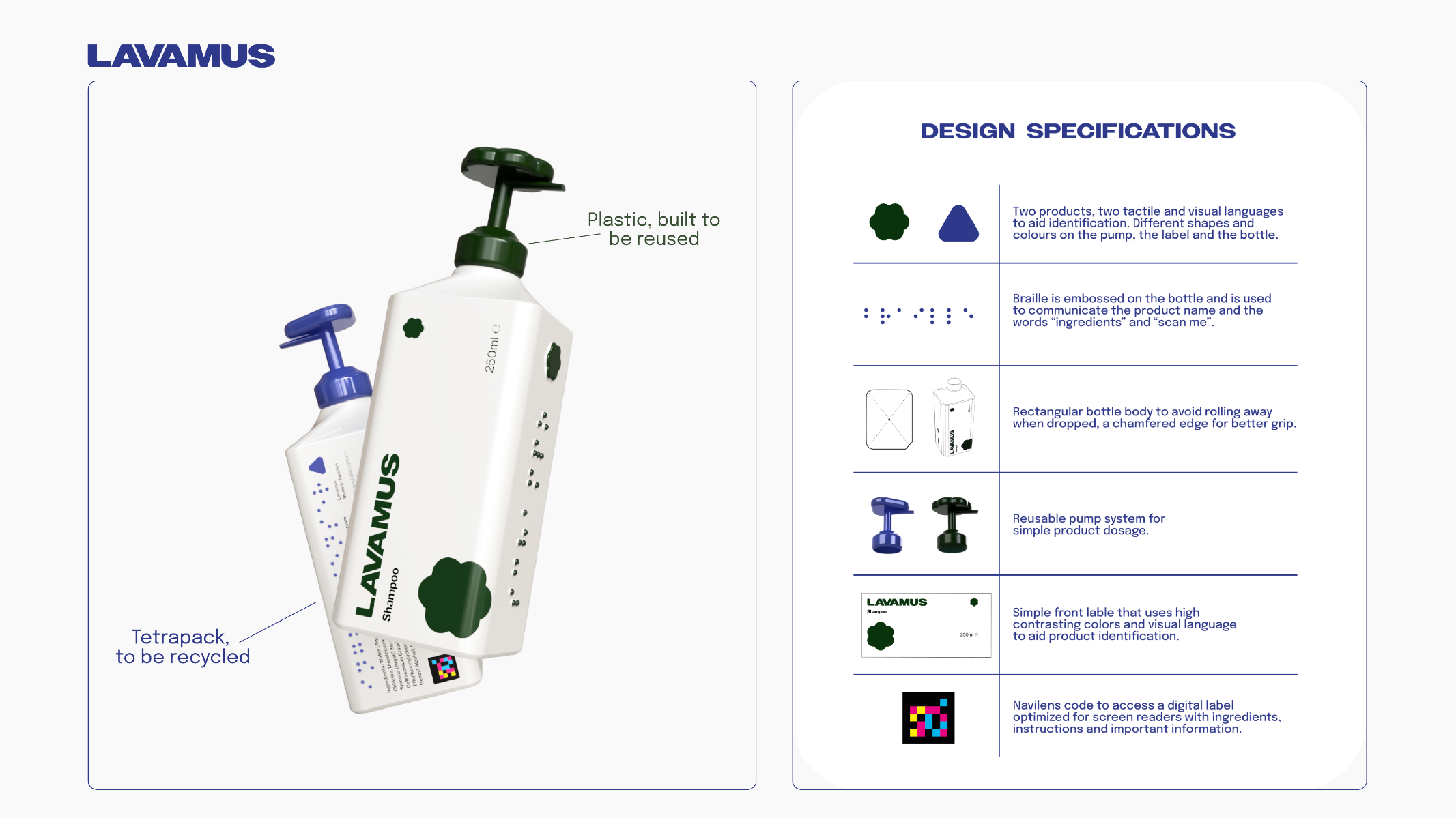
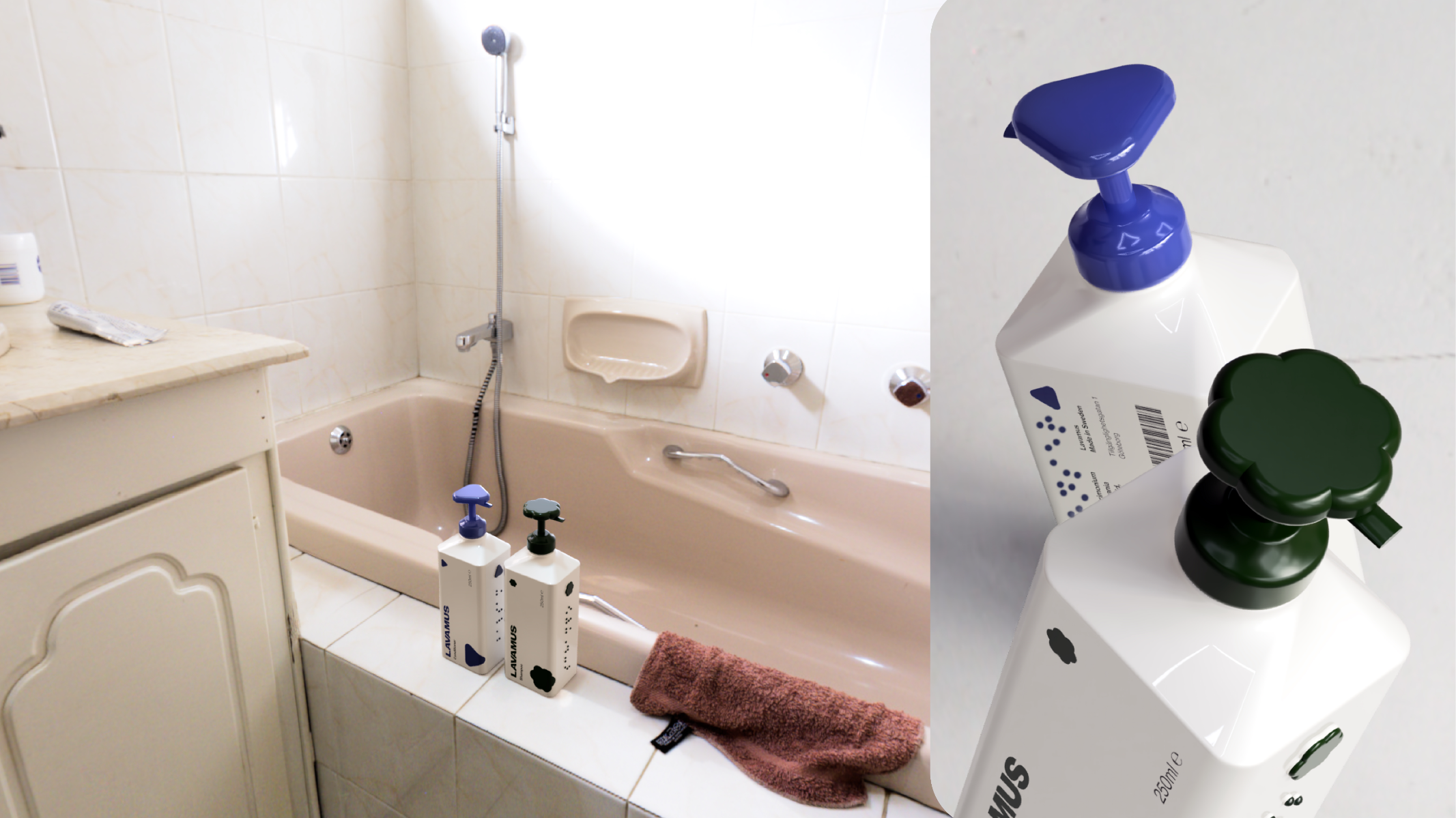
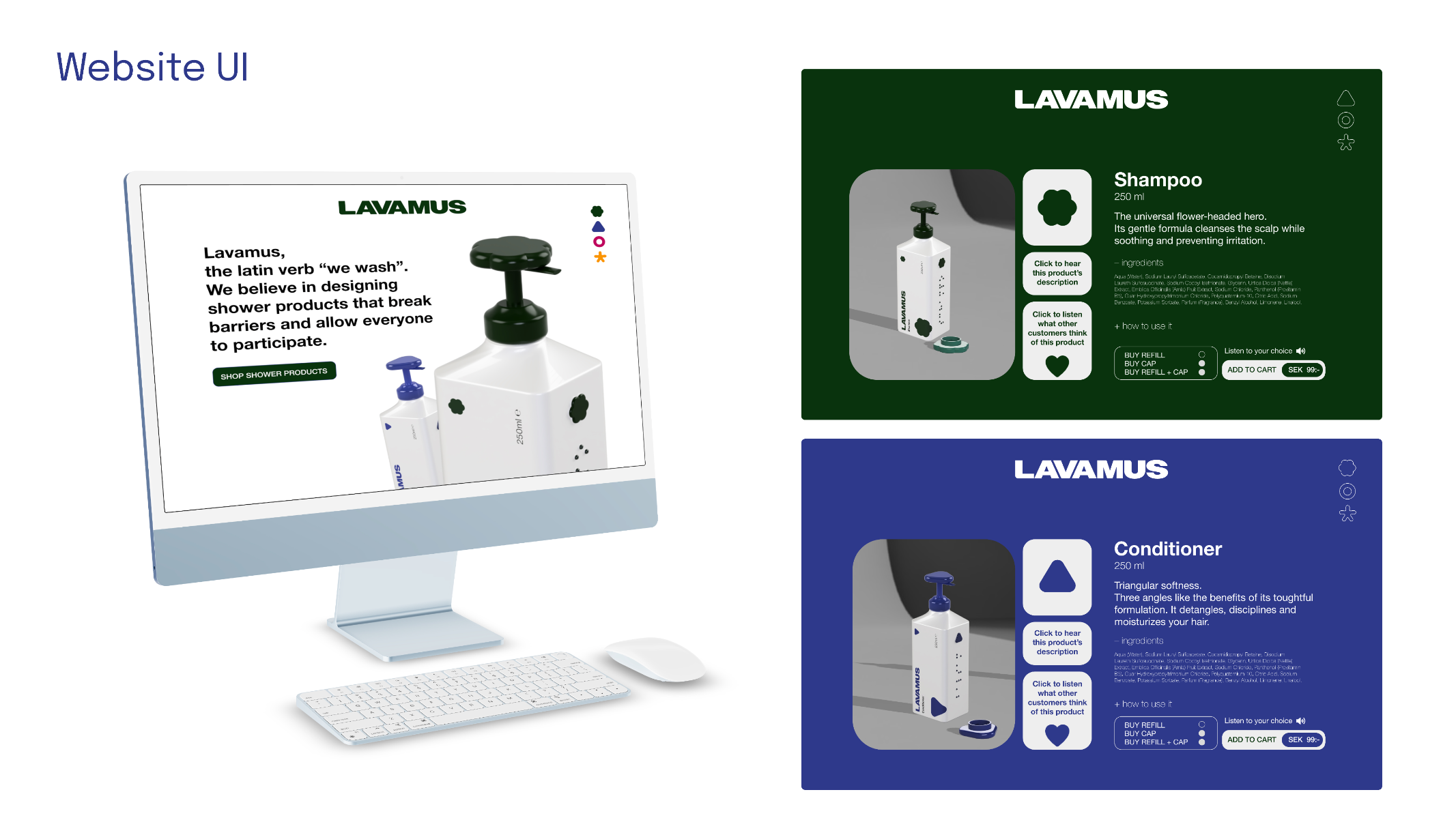
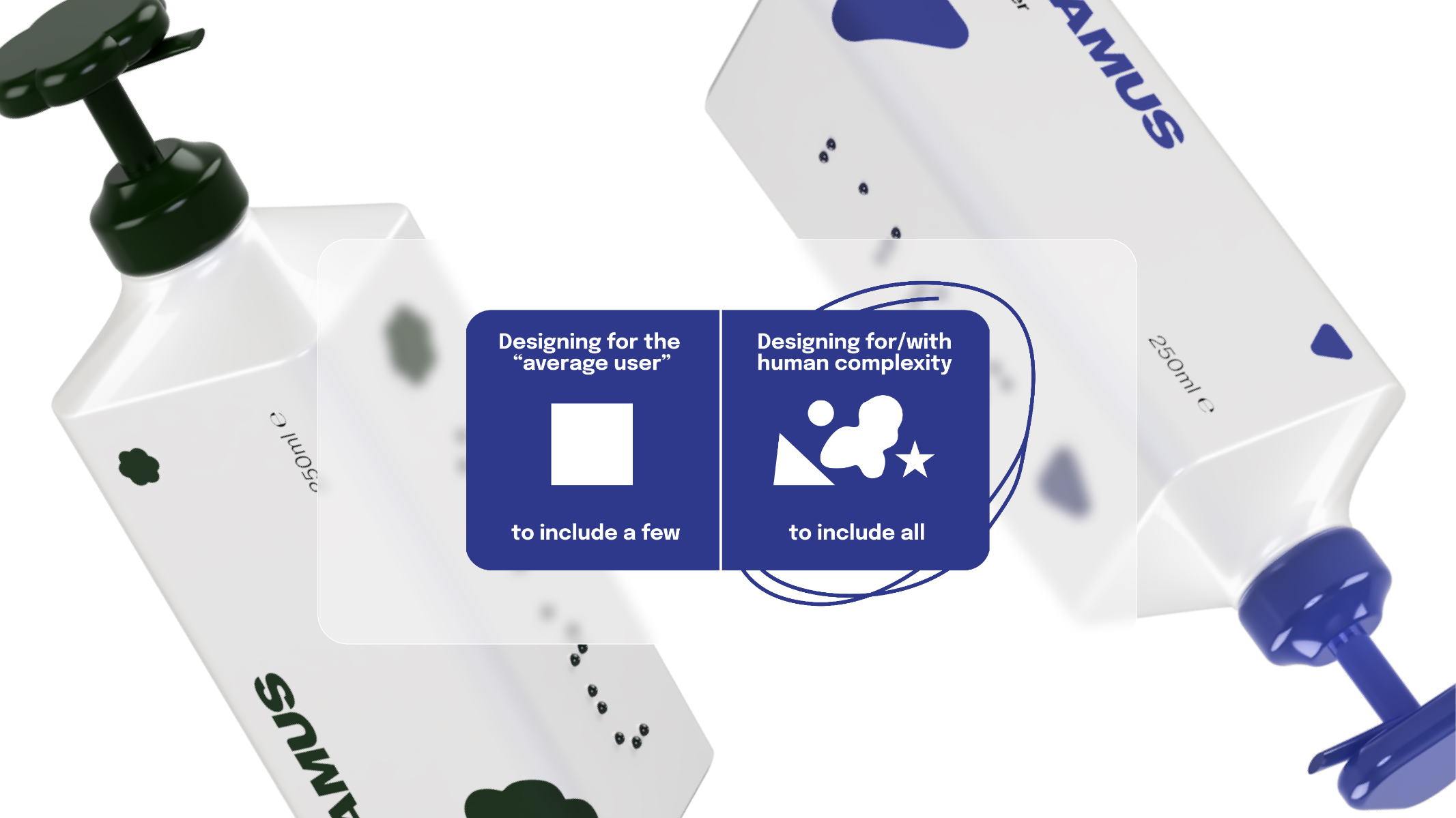
Cosmethic* Access is a product design project that addresses issues of accessibility in the packaging design of cosmetic and hygiene products, specifically focusing on the experience of people with visual impairments. The outcome of this inclusive design process is “Lavamus,” a brand concept for two shower products, co-designed in collaboration with members of Synskadades Riksförbund Kronoberg (The Swedish Association of the Visually Impaired). *Cosmethic is a composite word derived from ‘cosmetic’ and ‘ethic.’ It highlights the importance of ethical approaches in the cosmetic industry. Today, approximately 30 million Europeans with visual impairments face exclusion due to packaging that fails to meet their needs, thus preventing an easy access to everyday cosmetics, including essential hygiene products (European Blind Union n.d.). By embracing an approach rooted in Inclusive design and social sustainability, this thesis project advocates for a paradigm shift in the cosmetics industry — one that places inclusivity and accessibility at the core of product design processes to design with marginalized communities. If the world we live in is designed by and for the seeing, can we imagine a future where inclusion is positioned at the initial stages of the design process of any cosmetic packaging, aiming to design solutions that are equally accessible to all? I started this project without focusing on what the final outcome would be. Driven and inspired by the principles of inclusive design, I decided to take a step back to invite my collaborators, cosmetic users that are visually impaired and members of Synskadades Riksförbund Kronoberg, to be my co-designers in the process. Their insight and their experiences of exclusion shaped and informed the outcome of this project. In these months of collaboration based on research, ideation, empathy, testing and prototyping, I interviewed my co-designers, visited their homes, and carefully collected their experiences, suggestions and ideas relating to inaccessible cosmetic packaging. Our collaboration gave birth to “Lavamus” a brand concept of two shower products, A shampoo and a hair conditioner, designed to be accessible. The word “Lavamus” comes from latin and it means “We wash ourselves / We shower”, the term was chosen to emphasize that basic hygiene practices are a shared human need and experience, therefore the products that are involved in them should be accessible to all. Why shower products? I recognised the shower as an environment where most people can encounter a barrier when interacting with the packaging of hygiene products. In the shower, not only people that are visually impaired are affected by badly designed packaging, but also users that have a temporary or situational impairment, like individual that can’t wear glasses or contact lenses or who has recently undergone an eye surgery. In the tricky environment of the shower, we can solve issues of accessibility for one group, in this case persons that have permanent visual impairments and extend the benefits of the new design to who is temporarily impaired, this is a concept known as “Persona spectrum”. Designing an accessible brand experience: Accessible products are nothing without an accessible system that is built around them. The brand experience of Lavamus was designed to be accessible throughout the whole user journey, based on the insight collected from my collaborators. The products can only be purchased online, a sales point option preferred by people that are visually impaired, through an accessible and user-friendly website interface. The whole visual identity of the brand concept was conceived with accessibility in mind, from highly contrasting colours to interactive, audio-based features in the website. Design has a fundamental social potential. The way things are designed, such as packaging, has the power to decide who is able to participate in society, and who is not. This project operates in the framework of goal 10:“Reduced inequalities” from the Sustainable Development Goals.
Competitions