Natasha Redina
MA ceramics and glass
Royal College of Art
Graduates: 2025
Specialisms: Glass / Installation/Sculpture / Fine Art
My location: London, United Kingdom

Natasha Redina
First Name: Natasha
Last Name: Redina
University / College: Royal College of Art
Course / Program: MA ceramics and glass
Graduates: 2025
Specialisms: Glass / Installation/Sculpture / Fine Art
My Location: London, United Kingdom
Website: Click To See Website
About
Natasha Redina is a British artist whose practice bridges art, science, and the sacred.
She is an award-winning architectural stained glass artist, and she explores the dialogue between the conscious and unconscious through immersive installations, light, and glass.
A graduate of the Royal College of Art and SOAS, Redina’s work delves into liminality—threshold states of transformation—inviting audiences into meditative spaces where the material meets the immaterial.
Her award-winning practice draws on sacred symbolism, biophilic design, and transcultural myth to foster innovation, collaboration, and new world-building strategies.
Through her art, Redina creates environments that encourage reflection, imagination, and sensory engagement, aiming to humanise architectural space and cultivate a deeper connection between people and place.
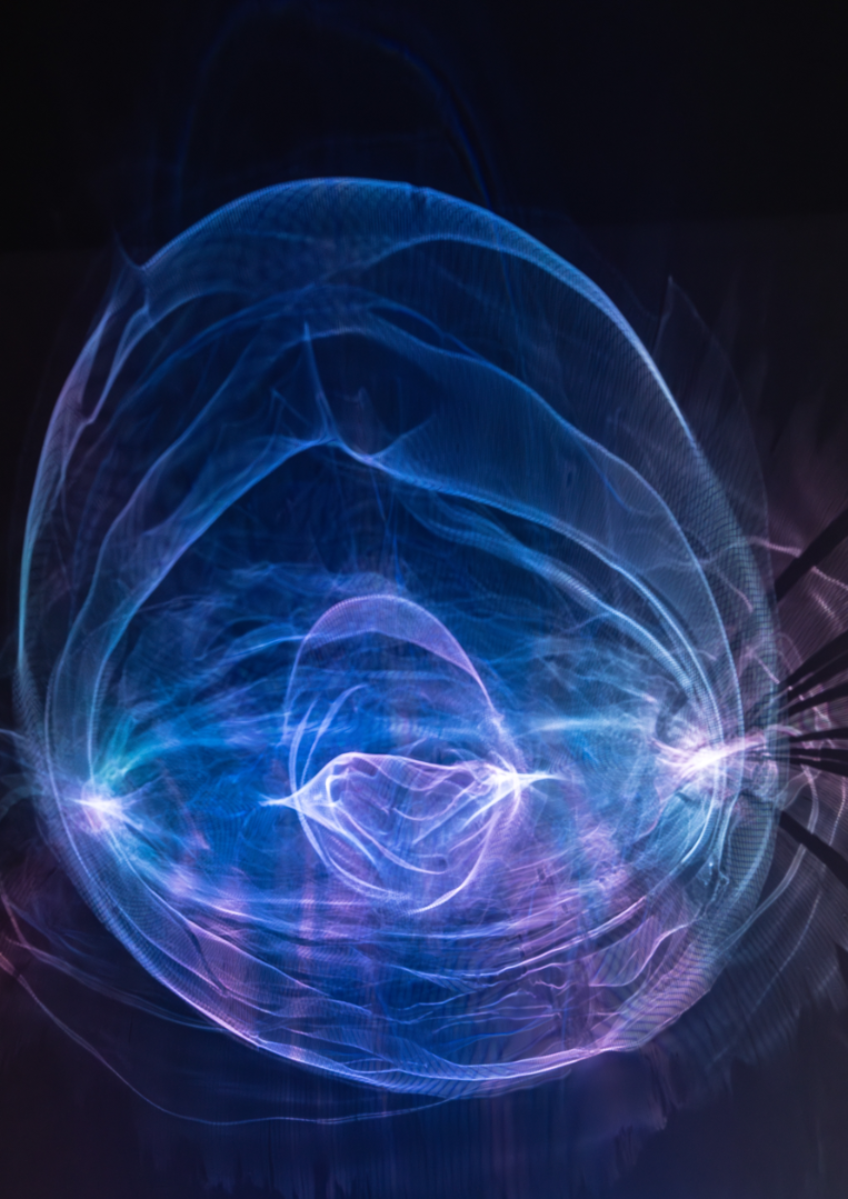
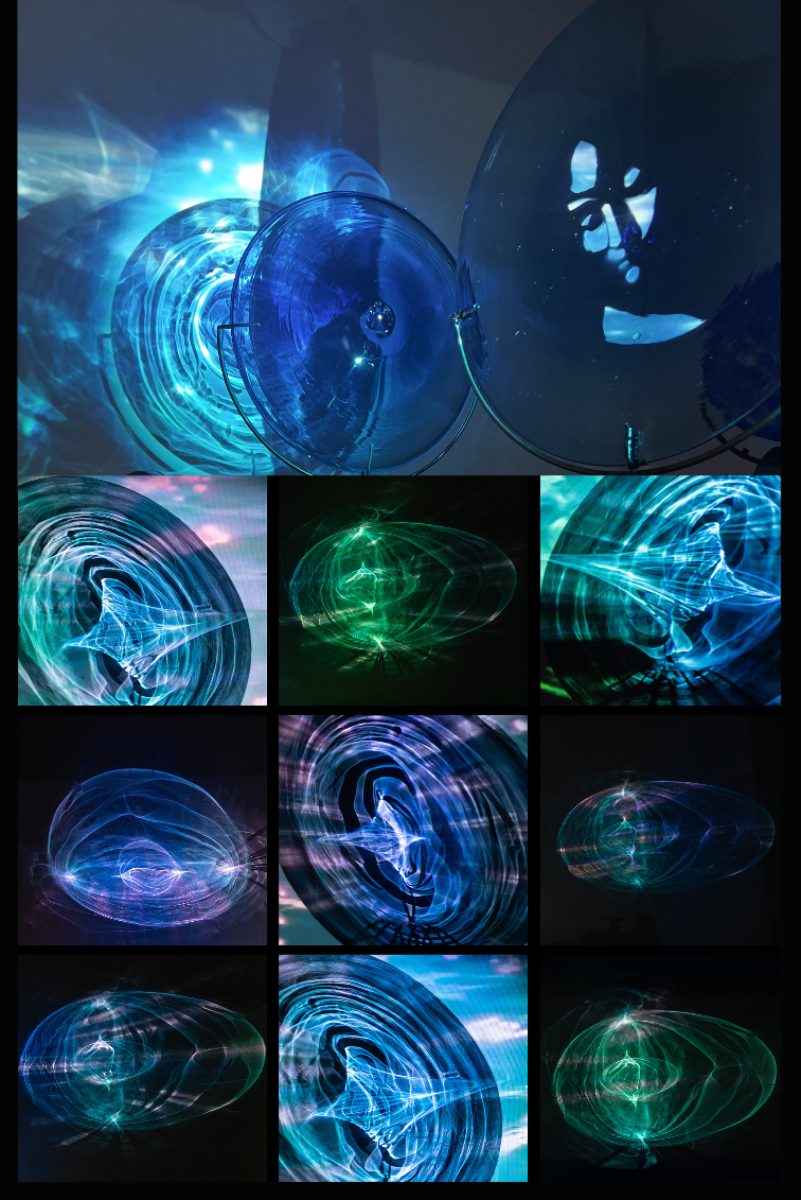
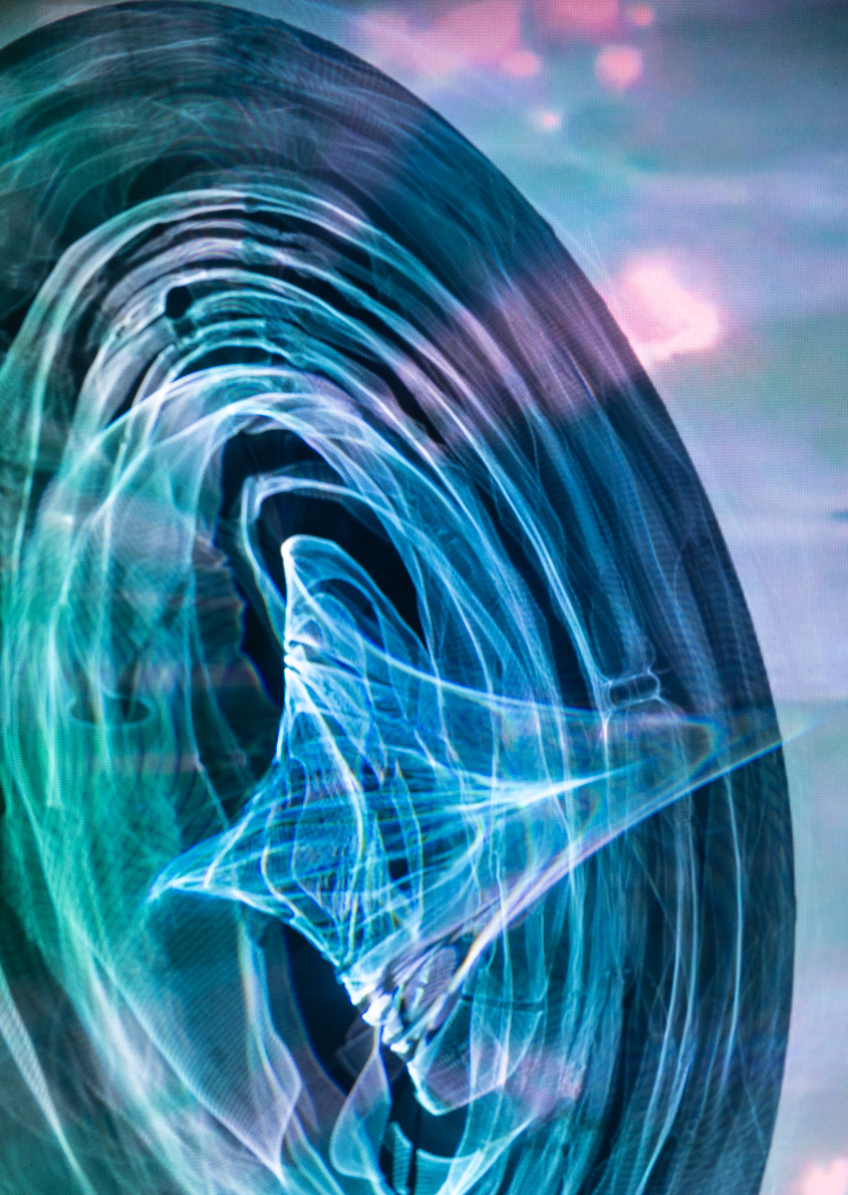
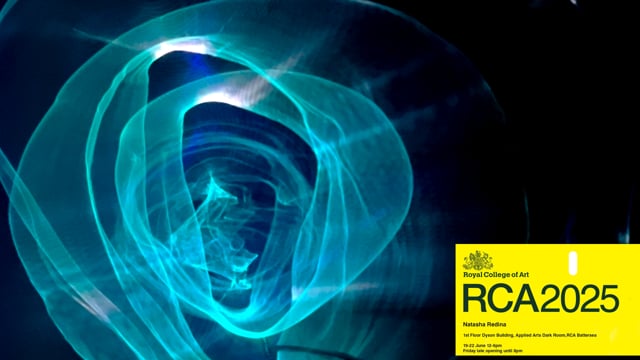
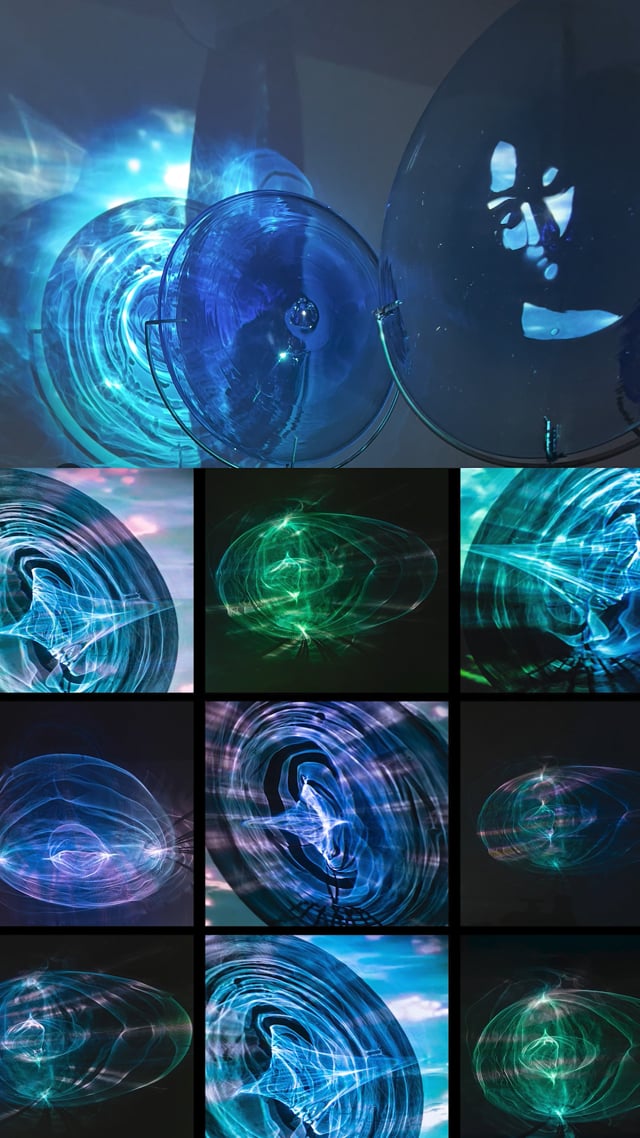
Leaning into the Unknown; Geometries of Light based on Leonardo Da Vinci's Optical Studies Leaning into the Unknown is an immersive, research-led installation that explores sustainability through creative practice, inspired by Leonardo da Vinci’s optical studies and designs for perpetual motion. Central to the work is a kinetic mechanism — a rotating structure based on Leonardo’s sketches — which rotates two hand-blown and etched glass roundels. Through these glass lenses, light is projected, creating stunning, immersive environments. These moving reflections show geometric patterns, revealing the underlying systems and temporal rhythms present in nature. The project merges aesthetic craft, scientific inquiry, and historical research. Traditional techniques such as stained glass-making are combined with engineering and digital media to create a work that is both materially refined and conceptually driven. The rotating mechanism is not only a visual centrepiece but a practical demonstration of how revisiting historic ideas with new technologies can inspire innovation today — particularly around themes of energy, motion, and resource use. Conversations during the exhibition sparked ongoing dialogue between artists, engineers, and scientists around the potential of collaborative, interdisciplinary approaches to address sustainability and the energy crisis. This engagement reflected a shared interest in keeping open a space for curiosity, hope and experimentation. By engaging the viewer physically and perceptually, the installation encourages reflection on our relationship with energy, time, and transformation. It proposes that sustainability is not only an environmental concern, but also a cultural and perceptual one — about how we see, understand, and interact with systems over time. The work honours Leonardo’s pioneering curiosity and invites us to continue that spirit of inquiry, using creative practice to reimagine how we live, design, and build for a better future.
Competitions