Jack Pattison
3D Design: Designer Maker BA Hons
University of Plymouth
Specialisms: Industrial Design / Product Design / Material Innovation
Location: Brighton, United Kingdom


Jack Pattison
First Name: Jack
Last Name: Pattison
Specialisms: Industrial Design / Product Design / Material Innovation
Sectors:
My Location: Brighton, United Kingdom
University / College: University of Plymouth
Course / Program Title: 3D Design: Designer Maker BA Hons
About
Hello, I'm Jack Pattison, a product designer from Brighton, England and a recent graduate from the University of Plymouth 3D Design BA Hons course.
While design has been a field that I have been drawn to since the days of DT at high school, in the last 5 years at college and university, it has become a significant part of my life, changing the way that I think, observe, communicate and feel. There is a certain spontaneity that being design-oriented offers you; inspiration can strike at any time and can be caused by the most bizarre of things.
For me, the most notable example of this is when, whilst sat at my desk, I discovered that pewter, one of the oldest alloys, can be written with after impulsively putting a scrap piece of the metal over my sketchbook. This moment of inspiration led me to design and make the first-ever 100% lead-free solid pewter writing instrument, a Pewterpoint Pencil.
As novel as this may sound, writing with pewter offers a great deal of benefits. Not only does one pencil last several decades, rather than several months or weeks, even as with its graphite counterpart, but it has a significantly lower carbon footprint. These pencils are infinitely recyclable and take very little energy to cast in the first place.
Being one solid piece of metal, every surface and edge acts as a writing tool, meaning that fine, bold, calligraphic, large shadings and even rubbings can be completed with just one tool.
Designed with ergonomics at the forefront, given the weight of my pencils being higher than that of the writing instruments that you are used to, they have a perfect 50-50 weight distribution, ensuring that they create satisfying momentum rather than hand fatigue. They are shaped to allow both right and left-handers, with all manner of grip types to use them with ease.
Thank you for reading!
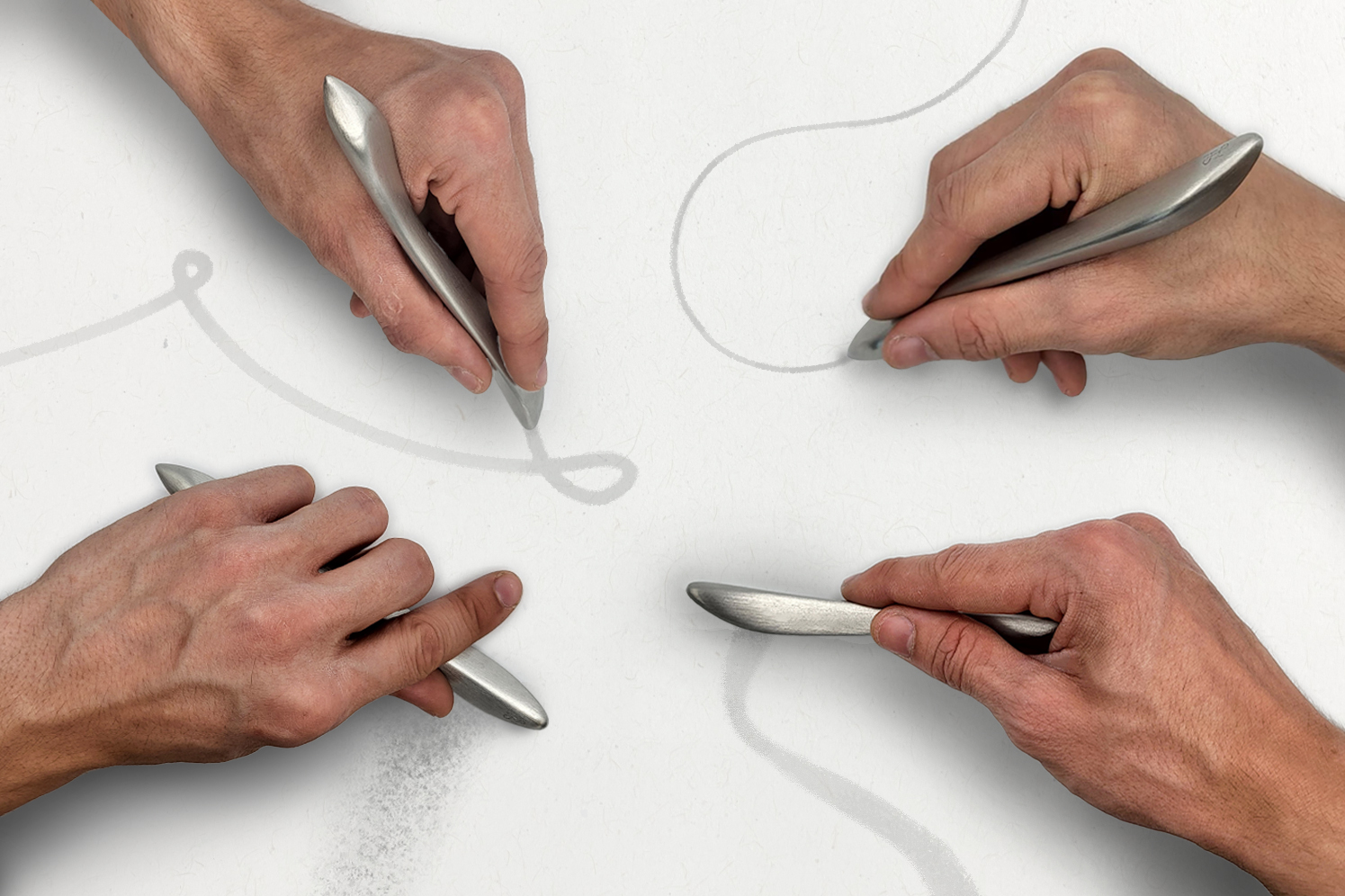
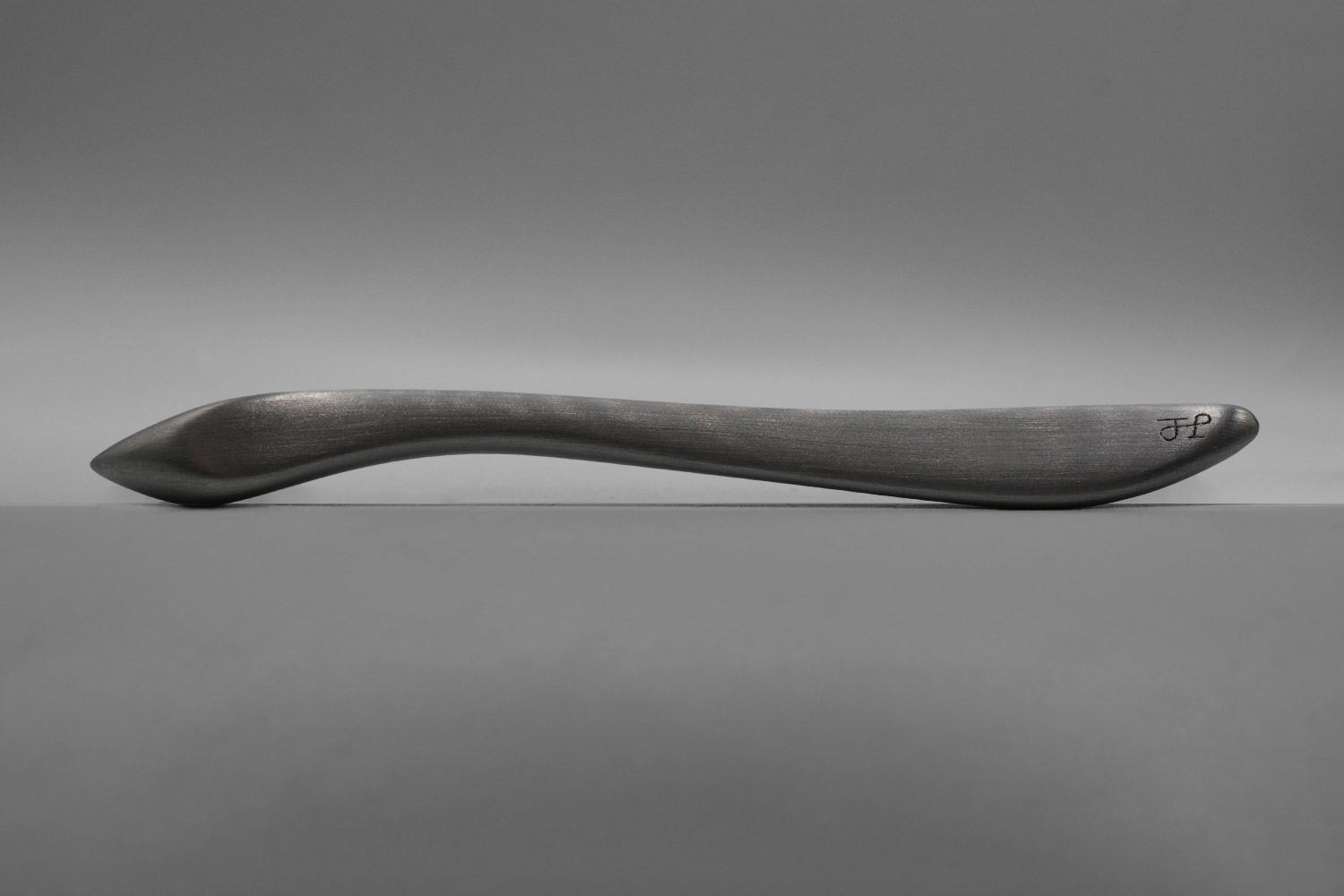
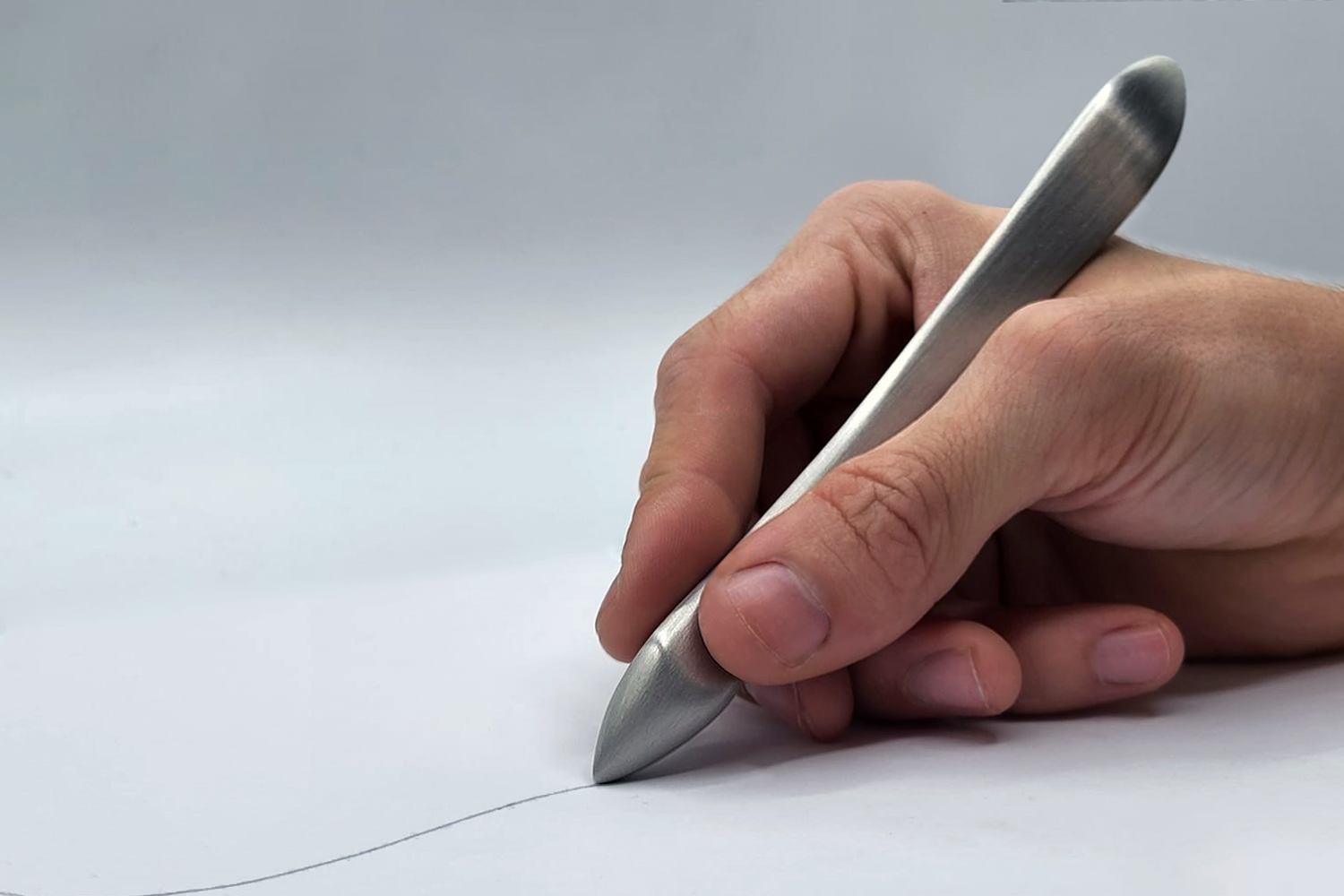
Last year, I discovered that pewter—one of humanity’s oldest alloys—can, unexpectedly, be used to write. A moment of impulsiveness, running a scrap of the metal over my sketchbook and realising that it leaves behind defined marks, led to designing and creating what is, to my knowledge, the first 100% lead-free solid pewter writing instrument: the Pewterpoint Pencil. This project explores how an ancient material can be reimagined in a completely new way. Pewter has been commonly used in all manner of objects for millennia, yet its property as a writing medium had never been explored. A Pewterpoint Pencil is a rare example of a product where the innovation lies in discovering the intrinsic value of a material. Cast entirely from one piece of pewter, this is about as simple a product as can be, not only making it reassuringly robust, but also highlighting an unexpected material property. Every edge and surface functions as a writing point, enabling fine lines, bold strokes, calligraphy, shading, and rubbings—all with a single instrument. Unlike conventional pencils, a Pewterpoint one can far outlast graphite, potentially serving its user for decades and becoming a tool that has the potential to be a lifelong companion for the designer or an artist who uses it. From an environmental standpoint, Pewterpoint Pencils only have upsides; pewter's low melting point means it requires comparatively little energy to cast, and it remains infinitely recyclable, so once a pencil has been worn down to the point of ineffectualness, what remains can be topped up with new pewter and recast into a new pencil entirely. Ergonomics were an important consideration as pewter weighs more than wood and graphite. Its triangular grip allows for comfort no matter the part of the pencil being used to write, while the perfect 50-50 weight distribution transforms pewter’s natural density into satisfying momentum rather than hand fatigue. Pewterpoint Pencils represent a rare intersection between material heritage, sustainability, and design simplicity, where questions arise around whether traditional materials can answer the requirements of a modern-day consumer, if we challenge our long-held preconceptions of what that material can be.
Competitions